Delta Waves and Deep Sleep: How Audio Tracks May Support Rest
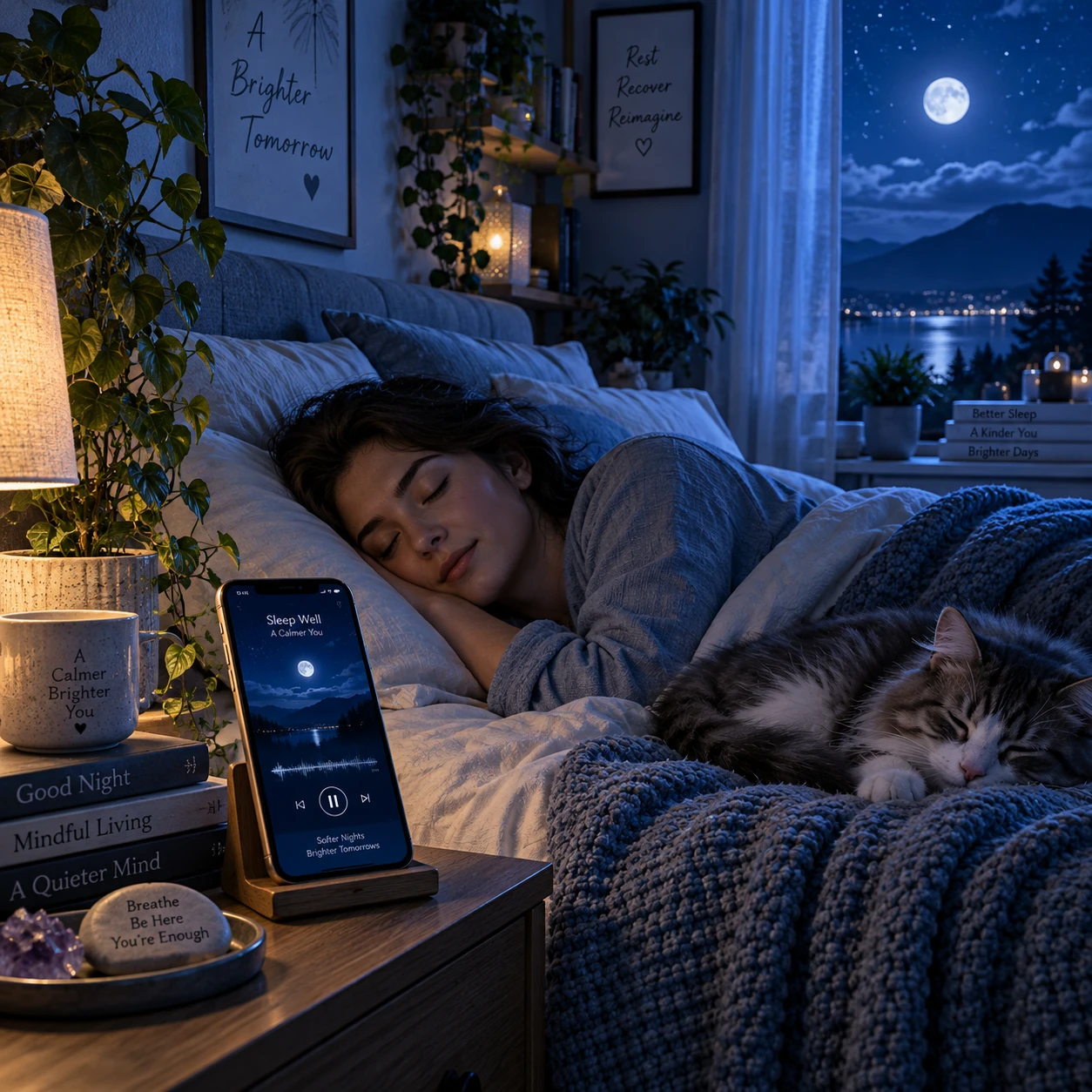
Delta waves are slow brain-wave patterns strongly associated with deep, non-REM sleep. Audio tracks marketed as “delta-wave” music aim to encourage relaxation or brain-wave entrainment, but they cannot guarantee deeper sleep or control your sleep stages.
For some people, gentle audio offers a useful cue to unwind: press play, settle in, and let the sound become part of a familiar bedtime routine. Understanding what the tracks can and cannot do helps you choose one without mistaking a relaxing listening experience for a proven sleep treatment.
What Are Delta Waves?
Delta waves are slow electrical patterns in the brain that are most prominent during deep, non-rapid eye movement (NREM) sleep. They are associated with the deepest stage of sleep, when waking someone can be more difficult than during lighter stages.
Sleep moves through recurring stages, including lighter NREM sleep, deeper NREM sleep, and rapid eye movement (REM) sleep. The mix and timing of these stages change during the night. Delta activity is especially characteristic of deep NREM sleep, but it is not a switch that a person can simply turn on by hearing a certain sound.
Researchers measure brain activity with tools such as electroencephalography (EEG). A track labeled “delta” usually refers to its sound design or intended effect, not proof that the listener’s brain has entered deep sleep. Brain waves vary naturally, and hearing audio alone does not confirm which sleep stage you are in.
This distinction matters: delta waves are a measurable brain pattern, while “delta-wave audio” is a consumer description. The two are related by the track’s stated aim, but they are not interchangeable.
How Delta-Wave Audio Tracks Work
Delta-wave audio tracks use steady tones, music, or environmental sounds to create a calming listening experience; some also claim to encourage brain-wave entrainment. Common formats include binaural beats and isochronic tones, but evidence does not show that these methods reliably produce deep sleep for everyone.
Binaural beats are made by playing slightly different tones in each ear. The listener perceives a pulsing beat at the difference between the tones. Because this effect depends on separate sounds reaching each ear, binaural tracks are generally designed for stereo headphones.
Isochronic tones use a single tone that turns on and off in a regular rhythm. Other sleep audio may combine drones, soft music, rain, ocean sounds, or pink noise, without trying to match a specific brain-wave frequency. These options can still help someone relax, even if they do not entrain brain activity.
Brain-wave entrainment is the idea that rhythmic stimulation may influence the timing of brain activity. It is an area of ongoing study, not a dependable shortcut to a particular sleep stage. A comfortable sound may be the practical benefit; the advertised frequency is not a guarantee of a biological result.
Can Audio Help You Sleep More Deeply?
Audio may help you feel calmer at bedtime or mask distracting sounds, which can make it easier to settle down. It cannot reliably force the brain into deep sleep, and a track’s label does not show that it changes sleep stages.
Sleep audio works best as a support for relaxation. A familiar, low-volume track can give your attention something neutral to follow instead of worries, traffic noise, or an unpredictable household sound. If you already find music or nature sounds soothing, a delta-themed track may serve the same purpose.
However, falling asleep more comfortably is not the same as increasing deep sleep. Without sleep-lab measurements, you cannot tell from a track alone whether your sleep architecture changed. Claims that a specific beat guarantees restorative sleep, treats insomnia, or produces a precise amount of deep sleep go beyond what listeners can verify.
Try judging a track by practical outcomes over several nights: Does it help you relax? Does it stay pleasant as you get drowsy? Do you wake less often because it masks a noise? If the sound becomes irritating or keeps you alert, it is the wrong choice, regardless of its frequency claims.
Choosing a Delta-Wave Sleep Track
Choose a delta-wave sleep track based on comfort, sound quality, and ease of use, rather than promises about brain-wave changes. The right option should feel soothing at low volume and should not require an uncomfortable setup.
Use this simple filter when comparing tracks:
- Sound style: Pick tones, ambient music, or nature sounds you find pleasant. Repetitive pulses can bother some listeners, so preview the track before bedtime.
- Track length: A 20- to 60-minute track with a timer can prevent audio from playing all night. Continuous playback may suit people who want to mask steady background noise, but it can also cause unwanted interruptions if the track changes suddenly.
- Volume: Set the sound just loud enough to hear comfortably. If you have to raise it to overpower noise, consider reducing the noise source or choosing a different sound instead.
- Listening setup: Speakers avoid wearing equipment in bed and work well for general ambient audio. Stereo headphones are usually needed to hear binaural beats as intended, but they may be uncomfortable or unsafe to wear while sleeping.
Preview the beginning and end of a track. Sudden volume changes, spoken introductions, advertisements, or sharp transitions can interrupt the very relaxation the audio is meant to support. A clean, steady track is often a better bedtime choice than an elaborate soundscape.
How to Use Audio in a Bedtime Routine
To use sleep audio, choose a comfortable track, set a low volume and timer, then listen while following a consistent wind-down routine. Pairing audio with regular sleep habits gives it a supportive role without treating it as a cure.
- Start before you feel rushed. Begin your wind-down at roughly the same time each night, rather than waiting until frustration about being awake sets in.
- Make the room sleep-friendly. Dim bright lights, keep the room comfortable, and put aside tasks that tend to pull your attention back into work or scrolling.
- Choose one sound and keep it simple. Use the same track for several nights if you like it. Familiarity can make the audio a cue for relaxation, though it does not control sleep stages.
- Set a timer and put the device aside. Position a phone or speaker where its screen and notifications will not distract you. If audio keeps you awake, turn it off.
Sleep hygiene still matters: a regular sleep schedule, a dark and quiet room, and a calming pre-bed routine all support better conditions for rest. Audio can fit into those habits, but it cannot compensate for a schedule that changes sharply each day or a bedroom full of disruptive noise.
Safety and Limitations
Sleep audio is generally a low-effort relaxation option, but listening should be comfortable, quiet, and free from device hazards. Persistent sleep problems need more than a playlist; discuss them with a qualified health professional.
Keep volume low enough that the sound does not feel intrusive. Avoid sleeping with wired headphones or earbuds if the cable, pressure, or device could disturb you. A bedside speaker is often simpler, while people who use headphones should choose a comfortable design and follow the manufacturer’s safety guidance.
Audio may also be the wrong tool for some sleepers. A pulsing tone can feel irritating, and even gentle music can become a distraction when someone is focused on whether it is “working.” If that happens, switch to silence or a steady, non-rhythmic background sound rather than forcing yourself to listen.
Do not use delta-wave tracks as a substitute for medical advice or treatment. If difficulty sleeping persists, affects daytime functioning, or comes with symptoms such as loud snoring or gasping, seek professional guidance. A clinician can help assess possible causes and discuss appropriate next steps.
Frequently Asked Questions
Do delta-wave tracks produce delta waves in the brain?
Not reliably, and a track cannot confirm that your brain has entered deep sleep. Binaural beats and isochronic tones are designed around rhythmic sound, but their effects vary, and a consumer audio label is not a brain measurement.
Should I use headphones or speakers while sleeping?
Speakers are often more comfortable for overnight listening and work with most ambient tracks. Binaural beats generally require stereo headphones during listening, but headphones may be uncomfortable to sleep in; choose the setup that feels safe and does not disturb your rest.
How long should I listen to a sleep track?
There is no required duration. Try a short track or set a 20- to 60-minute timer, then adjust based on whether the sound helps you unwind. You do not need to play audio all night for it to serve as a bedtime cue.
Can delta-wave audio replace good sleep habits?
No. Sleep audio can support relaxation, but it does not replace a regular schedule, a suitable sleep environment, or professional advice for ongoing sleep difficulties. Treat it as one optional part of a broader routine.