The Impact of White Noise on Sleep Quality: Benefits, Limits, and Tips
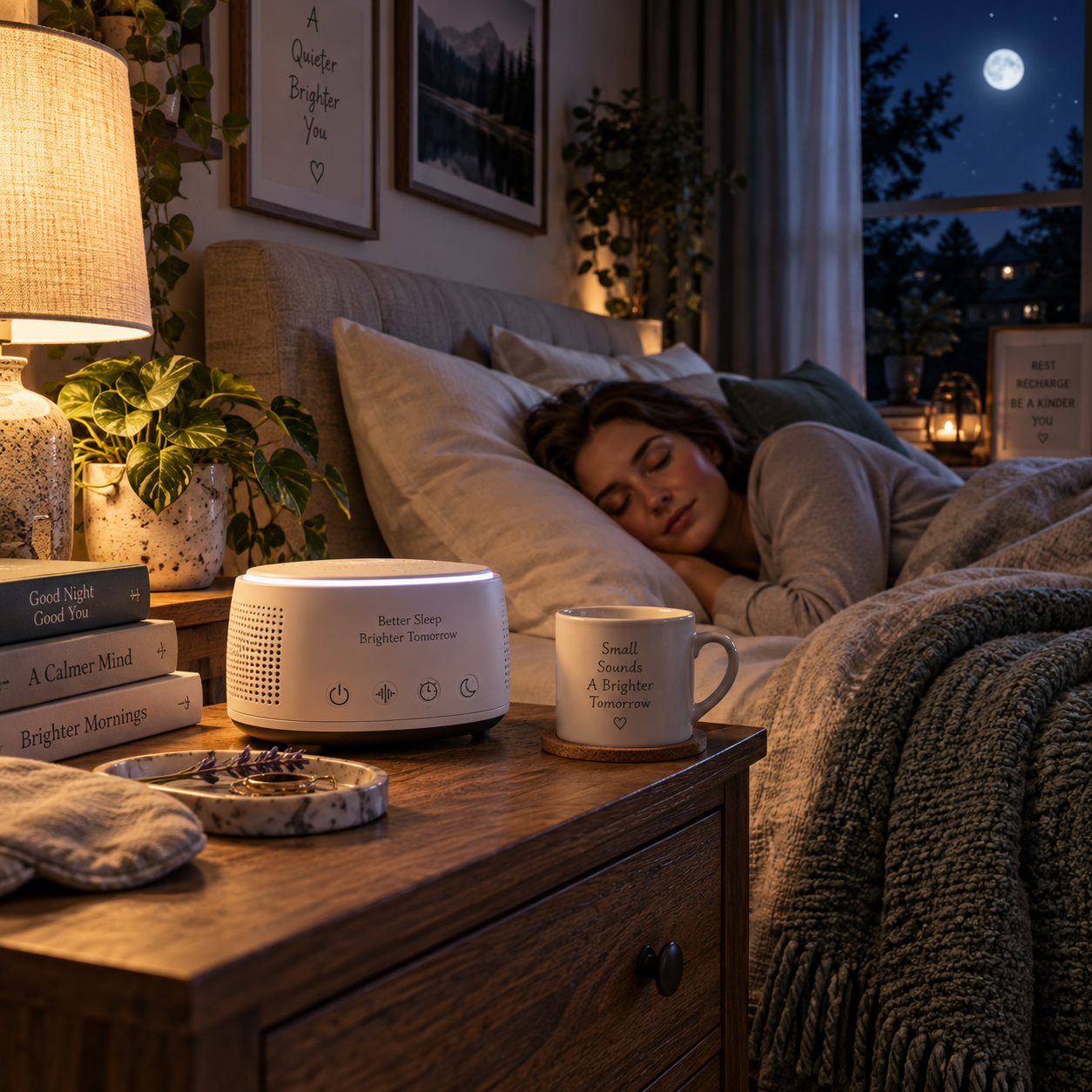
White noise is a steady sound that some people use to make a bedroom feel less vulnerable to sudden disturbances. By masking changes in background noise, it may help with sleep onset or reduce the chance that a passing car, hallway conversation, or other abrupt sound will grab your attention. Its effect on sleep quality varies, though: some sleepers find it soothing, while others dislike the constant hiss or sleep better in quiet.
The useful question is not whether white noise is universally good or bad. It is whether a comfortable, steady sound makes your own nights less disrupted without creating a new annoyance.
What Is White Noise?
White noise is a continuous sound containing a broad range of audible frequencies, often heard as a steady hiss. In a bedroom, it can create a relatively consistent sound backdrop that makes brief environmental noises less noticeable.
Ordinary background noise is any sound already present in a room, such as a fan, traffic, or a neighbor’s television. It may fluctuate in volume or come and go. A white noise machine or relaxation audio, by contrast, is played intentionally and usually at a steady level. White noise does not remove outside sounds; it can reduce the contrast between them and the room’s usual sound level.
That distinction matters. A sudden door slam stands out against silence because it is a sharp change. When steady sound is already present, the same slam may feel less startling. But a sound machine cannot reliably block very loud disturbances, and turning it up to overpower them can make the room uncomfortably noisy.
How White Noise May Affect Sleep
White noise may support sleep by masking some disruptive sounds, helping certain people settle down or stay asleep. Its likely benefit is reducing how noticeable sound changes feel, rather than directly inducing sleep.
Sound masking can be useful when the bedroom is not completely quiet. A steady audio bed may soften the contrast of intermittent traffic, a ticking appliance, or voices from another room. For some people, that means fewer attention-grabbing interruptions and an easier transition into sleep. Others may find the predictable sound calming as part of a bedtime routine.
White noise may also help limit nighttime awakenings caused by brief, unpredictable sounds, although it cannot prevent every awakening. Sleep is affected by many factors, and sound is only one of them. If noise is not what keeps you awake, adding more sound may do little or may even make sleep less comfortable.
It helps to separate falling asleep from staying asleep. You might notice that white noise makes it easier to relax at bedtime but has no effect on waking during the night. Or it may make the room feel more consistent without changing how quickly you fall asleep. Pay attention to the outcome you actually care about instead of assuming that one change improves every part of sleep quality.
Potential Benefits and Limitations
White noise can make an unpredictable sound environment feel steadier, but its benefits are personal and its drawbacks are practical. The best test is whether you sleep more comfortably with it at a low, tolerable volume.
Possible benefits include masking small, intermittent sounds and creating a familiar cue for bedtime. A portable sound machine can be helpful for people who sleep in different rooms or travel, provided they find the sound pleasant. Some listeners also prefer audio over silence because a steady sound draws less attention than sporadic noise.
There are trade-offs. White noise itself can be distracting, particularly if you are sensitive to high-pitched or electronic-sounding audio. A device placed too close or played too loudly may be uncomfortable. If you rely on it, a power outage or unfamiliar sleeping environment can also make the absence of the usual sound noticeable.
Responses differ for reasons such as the sound’s character, bedroom acoustics, the source of disturbance, and personal preference. More volume is not automatically more effective: the goal is a comfortable backdrop, not drowning out every sound. If a persistent noise is severe or a sleep problem continues despite reasonable changes to the environment, white noise should not be treated as a cure or a substitute for appropriate help.
White Noise Compared With Other Sleep Sounds
White noise has a brighter, more hiss-like character than pink noise, while nature sounds tend to have more variation. No sound type is best for everyone; choose the one that is comfortable and least distracting to you.
Pink noise also contains a broad range of frequencies, but its lower frequencies are more prominent relative to the higher ones. Many people describe it as deeper or softer than white noise. That description is a matter of listening experience, not a guarantee that pink noise will improve sleep more effectively.
Nature sounds, such as rain or flowing water, may feel relaxing to some listeners. They can also change in intensity or include distinct events, such as a bird call or thunder, that attract attention. A loop with noticeable gaps or abrupt edits may be less consistent than a steady sound machine.
When comparing sounds, keep other conditions as similar as possible. Try one option for several nights at a comfortable volume, then compare it with another. Consider how quickly you settle, whether you notice fewer noise-related awakenings, and how rested you feel in the morning. Your own response is more useful than a claim that one frequency or nature track is universally superior.
How to Use White Noise for Sleep
To use white noise for sleep, start at a low, comfortable volume, place the speaker away from your head, and keep the sound steady. Test the setup over several nights before deciding whether it helps.
- Set a comfortable volume. Keep it low enough that the sound fades into the background and does not make you strain to hear conversation or other normal sounds. There is no single volume setting that suits every room or listener.
- Choose sensible placement. Put a sound machine across the room or on a stable surface away from your pillow. Avoid placing a speaker right beside your head, where the sound may feel intrusive even at a modest setting.
- Decide when it should play. You can use a timer for the period when you are settling down or let the sound run overnight if it remains comfortable. Neither approach is necessary for everyone; choose based on whether disturbances occur at bedtime, later in the night, or both.
- Keep the sound consistent. Use a steady track or machine setting. Sudden changes, long silences, or a loop that clicks at the end may draw more attention than the background noise you hoped to mask.
- Give the test a fair chance. Try the same setup for several nights, changing one factor at a time. Note your ease of falling asleep, any sound-related awakenings, and how you feel the next morning.
Consistency helps you judge the effect, but it does not mean you must play white noise every night. If you sleep better without it on quiet nights, there is no need to keep it on out of habit. The aim is a useful sound environment, not dependence on a particular device or track.
Is White Noise Right for You?
White noise may be right for you if unpredictable sounds regularly distract you and a steady, quiet backdrop feels comfortable. If it irritates you or makes no noticeable difference, quiet or another sleep sound may be a better fit.
Use a simple three-part check: comfort, disruption, and result. First, can you listen without focusing on the sound? Second, are outside noises a meaningful source of distraction? Third, after a short trial, do you notice easier sleep onset, fewer noise-related awakenings, or a more settled bedtime? If the answer to the first two is yes and the third improves, keeping the sound in your routine may make sense.
If you feel more alert, wake because of the audio, or turn it up repeatedly to cover loud disturbances, change the placement or reduce the volume. You can also try pink noise, gentle nature sounds, or silence. A short comparison is more informative than switching among several tracks every night.
White noise is a tool for shaping the bedroom sound environment, not a guaranteed sleep fix. Let your own comfort and sleep experience guide the decision, and use the lowest level that provides a helpful background.
Frequently Asked Questions
Does white noise help everyone sleep?
No. Some people find that it masks disruptive sounds or feels relaxing, while others find it irritating or notice no improvement. Personal preference and the type of noise in the room matter.
Should white noise play all night?
It can play all night if the sound remains comfortable, but that is not required. A timer may suit someone who wants sound only while falling asleep; overnight playback may be more useful when disturbances continue later.
How loud should white noise be?
Use the lowest volume that makes the background feel steadier without becoming distracting. Keep the speaker away from your head, and do not turn it up simply to overpower very loud noise.
Is white noise better than pink noise?
Neither is universally better. White noise often sounds brighter, while pink noise is commonly perceived as deeper. Try each at a comfortable level and choose the one that helps you relax without drawing attention.