The Role of Melatonin in Regulating Sleep Cycles: What Your Body Needs to Rest
Sleep rarely feels like a biological process until it stops working. Behind every smooth transition from wakefulness to rest is a hormone most people have heard of but few truly understand. Melatonin is central to that story — and knowing how it works gives you real leverage over your nights.
What Is Melatonin and Where Does It Come From?
Melatonin is a hormone produced primarily by the pineal gland, a small pea-sized structure nestled deep in the brain. Its core job is to signal darkness to every cell in your body, essentially telling your system that night has arrived and it is time to prepare for sleep.
The pineal gland synthesizes melatonin from serotonin, which itself depends on adequate exposure to daylight during waking hours. This dependency matters: your nighttime melatonin output is partly shaped by how much light you received earlier in the day. It is a system built on contrast — bright days and dark nights.
Small amounts of melatonin are also produced in the gut, retina, and immune cells, though the pineal gland remains the primary source driving the sleep-wake cycle. Unlike sleep-inducing sedatives, melatonin does not knock you out. It is a timing signal, not a switch.
How Melatonin Governs Your Circadian Rhythm
Melatonin works by syncing your body's internal clock — the circadian rhythm — to the external light-dark cycle. Your brain contains a master clock called the suprachiasmatic nucleus (SCN), which reads light signals from the eyes and instructs the pineal gland when to release melatonin and when to suppress it.
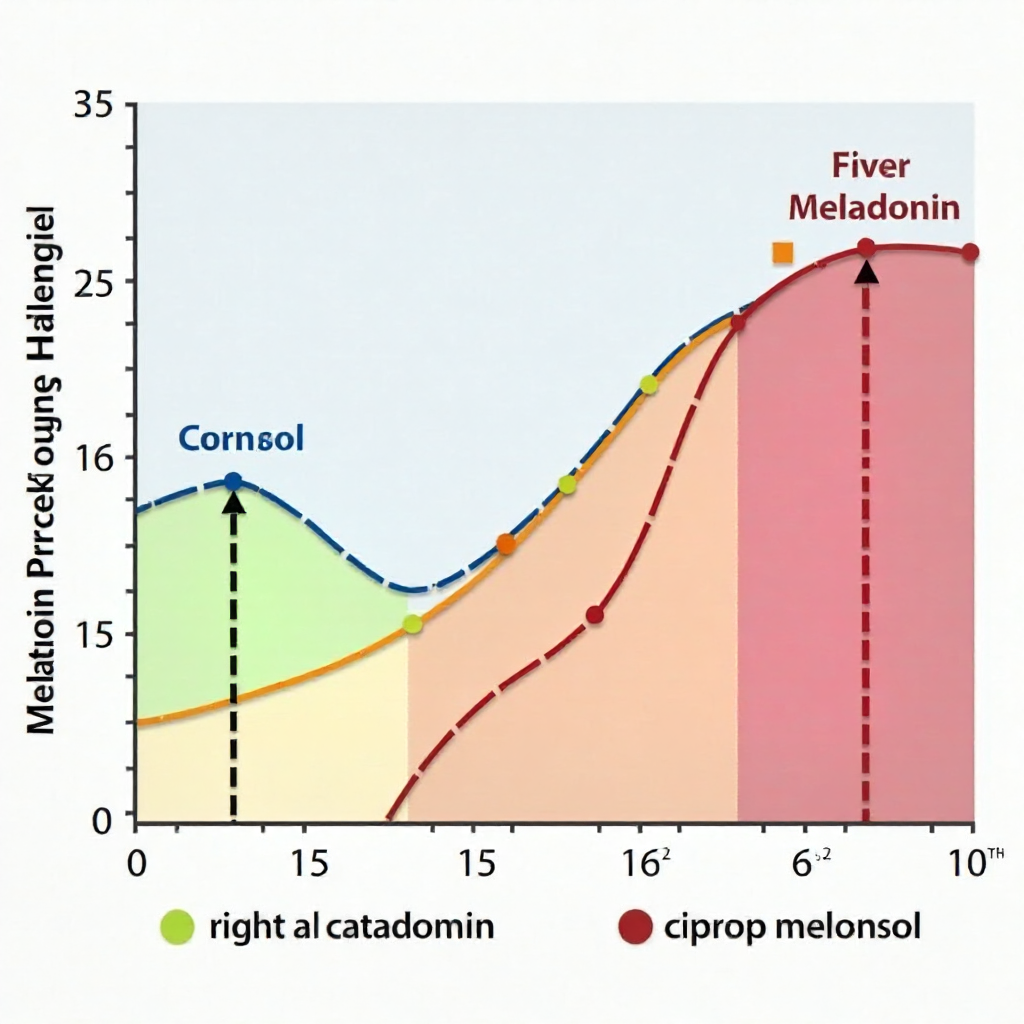
In a typical 24-hour cycle, melatonin levels begin rising in the early evening, roughly two hours before your habitual bedtime. They peak in the middle of the night, then taper off toward morning as light exposure signals the SCN to halt production. Cortisol — the hormone associated with alertness and stress — follows the opposite arc, rising in the early morning to help you wake.
This push-pull relationship between melatonin and cortisol is the biological engine of your sleep-wake cycle. When both are timed correctly, falling asleep feels effortless. When the timing slips — through travel, shift work, or irregular schedules — the whole rhythm drifts, and sleep becomes elusive.
What Disrupts Natural Melatonin Production?
Several common modern habits interfere directly with melatonin release, often without people realizing the connection. The biggest offender is blue light exposure from screens — phones, tablets, laptops, and LED televisions all emit wavelengths that the SCN interprets as daylight, suppressing melatonin for hours after exposure.
Other significant disruptors include:
- Irregular sleep schedules — shifting bedtime by even 90 minutes on weekends can desynchronize your circadian rhythm for days
- Elevated cortisol at night — chronic stress keeps cortisol high in the evening, directly blunting melatonin's rise
- Bright overhead lighting after sunset, particularly cool-white or fluorescent bulbs
- Noise and environmental disruption — unpredictable sounds activate the stress response, which in turn suppresses melatonin
- Alcohol and caffeine — both interfere with melatonin timing, caffeine by delaying its onset and alcohol by fragmenting the sleep architecture it helps establish
The pattern here is consistent: anything that keeps your nervous system in an alert, stimulated state during the hours before bed will delay or dampen melatonin production. Your body needs a genuine signal that the day is ending.
The Connection Between Melatonin and Sleep Quality
Melatonin initiates sleep onset rather than controlling sleep depth. This is a distinction worth holding onto, because it changes how you think about the hormone's role. Melatonin opens the door to sleep; other biological processes determine what happens once you walk through it.
Once sleep begins, melatonin continues to support the architecture of the night. It helps regulate the progression through sleep stages, including the transition into REM sleep — the phase associated with memory consolidation, emotional processing, and vivid dreaming. Disrupted melatonin rhythms are linked to reduced REM duration and more fragmented nights overall.
This is why people with chronically disrupted melatonin often report waking unrefreshed even after spending adequate time in bed. The quantity of sleep and the quality of sleep are separate things, and melatonin sits at the intersection of both.
Natural Ways to Support Melatonin Release Before Bed
The most effective approach to melatonin optimization is building an environment and routine that your brain recognizes as a consistent wind-down signal. No supplement required — at least not as a starting point.
Practical habits that genuinely support melatonin production:
- Dim your lights 60–90 minutes before bed — switch to warm, low-level lamps rather than overhead lighting
- Set a consistent bedtime and wake time, including weekends — this is the single most powerful anchor for your circadian rhythm
- Limit screen exposure in the hour before sleep, or use blue-light filtering settings if screens are unavoidable
- Get natural daylight exposure in the morning — even 15–20 minutes outside helps calibrate your internal clock for the night ahead
- Create a deliberate wind-down routine that signals the transition from active day to restful night — reading, gentle stretching, or a calming audio session all work
Consistency is the keyword here. The brain learns patterns quickly. A routine repeated nightly becomes a melatonin trigger in itself, because the body begins anticipating sleep before the routine even ends.
How Calming Audio Can Reinforce Your Melatonin Window
Sound has a direct relationship with the nervous system's arousal state, which makes it a legitimate tool for supporting melatonin release. When you hear unpredictable, jarring noise, your stress response activates and cortisol rises — the opposite of what melatonin needs. Calming, predictable audio does the reverse.
Sleep audio and relaxation tracks — whether nature sounds, ambient music, binaural beats, or guided breathing exercises — work by reducing physiological arousal. Heart rate slows, breathing deepens, and the nervous system shifts from sympathetic (alert) to parasympathetic (rest) dominance. That shift creates the internal conditions melatonin needs to rise unimpeded.
There is also a conditioning effect worth considering. Using the same audio environment each night trains your brain to associate those sounds with sleep. Over time, the audio itself becomes part of the melatonin trigger — a Pavlovian cue that the body has learned to respond to. This is why sleep hygiene experts increasingly recognize environmental consistency, including sound, as a meaningful part of pre-sleep preparation.
For people who struggle with racing thoughts or difficulty switching off, a well-chosen relaxation track can bridge the gap between the end of the day and genuine sleepiness — without requiring any willpower or effort to "try" to sleep.
Should You Consider Melatonin Supplements?
Melatonin supplements can be appropriate in specific situations, but they work best as a targeted tool rather than a nightly habit. The most evidence-supported use cases include jet lag recovery, adjusting to shift work schedules, and helping people with delayed sleep phase disorder shift their sleep timing earlier.
For most people experiencing garden-variety insomnia or poor sleep quality, the natural optimization approach — consistent schedules, light management, a calming pre-sleep routine — addresses the root cause more effectively than supplementation. Supplements add melatonin to the system; they do not fix the underlying disruptions that suppressed it in the first place.
If you are considering melatonin supplements, a few honest caveats apply. The appropriate dose is almost certainly lower than what most over-the-counter products contain. Timing matters as much as dose — taking it too late provides little benefit. And long-term reliance on supplements without addressing behavioral factors is unlikely to produce lasting improvement.
Consulting a healthcare professional before starting supplementation is the right call, particularly if sleep difficulties are persistent, severe, or accompanied by other symptoms. A doctor can rule out underlying conditions — sleep apnea, anxiety disorders, thyroid imbalances — that melatonin supplements will not touch.
Frequently Asked Questions
What time does the body naturally start producing melatonin?
For most adults following a typical schedule, melatonin production begins rising roughly two hours before habitual bedtime — often around 9–10 PM. This timing shifts with age and individual chronotype, with night owls experiencing a later onset and early risers an earlier one.
Does screen time before bed really affect melatonin levels?
Yes, meaningfully so. Blue light emitted by phones, tablets, and computers suppresses melatonin production by signaling the brain that daylight is still present. Even 30–60 minutes of screen exposure close to bedtime can delay melatonin onset by an hour or more in some individuals.
Can listening to sleep music help with melatonin production?
Not directly — audio does not trigger melatonin synthesis the way darkness does. But calming sleep music lowers cortisol and reduces nervous system arousal, which removes one of the key barriers to melatonin rising naturally. The indirect effect on sleep quality is real and well-supported by sleep hygiene research.
How long does melatonin stay active in the body overnight?
Melatonin levels typically remain elevated for around four to eight hours, peaking in the middle of the night and declining toward morning as dawn approaches. The exact duration varies by individual, age, and whether any disruptors — light, noise, stress — interfere during the night.
Is it possible to have chronically low melatonin, and what causes it?
Chronic melatonin suppression is possible and more common than many people realize. Consistent exposure to artificial light at night, long-term irregular sleep schedules, high ongoing stress levels, and certain medications can all reduce baseline melatonin output over time. Age is also a factor — melatonin production naturally declines from middle age onward, which partly explains why older adults often experience lighter, more fragmented sleep.